4 min read | By Admin | 05 January 2022 | Frameworks
share on:
In today’s global business environment, countless businesses are investing in mobile apps to obtain their marketing value and to provide effective outcomes for their target customers.
If you’re planning to build an app for your business, it is good to start with knowing the best framework to build a scalable mobile app. There are a lot of popular frameworks available to choose from but have to consider the best one.
Hence in this year of 2026, React Native and Flutter are ideal frameworks to build an app with required business goals to boost brand recognition and improve the overall visibility of the business.
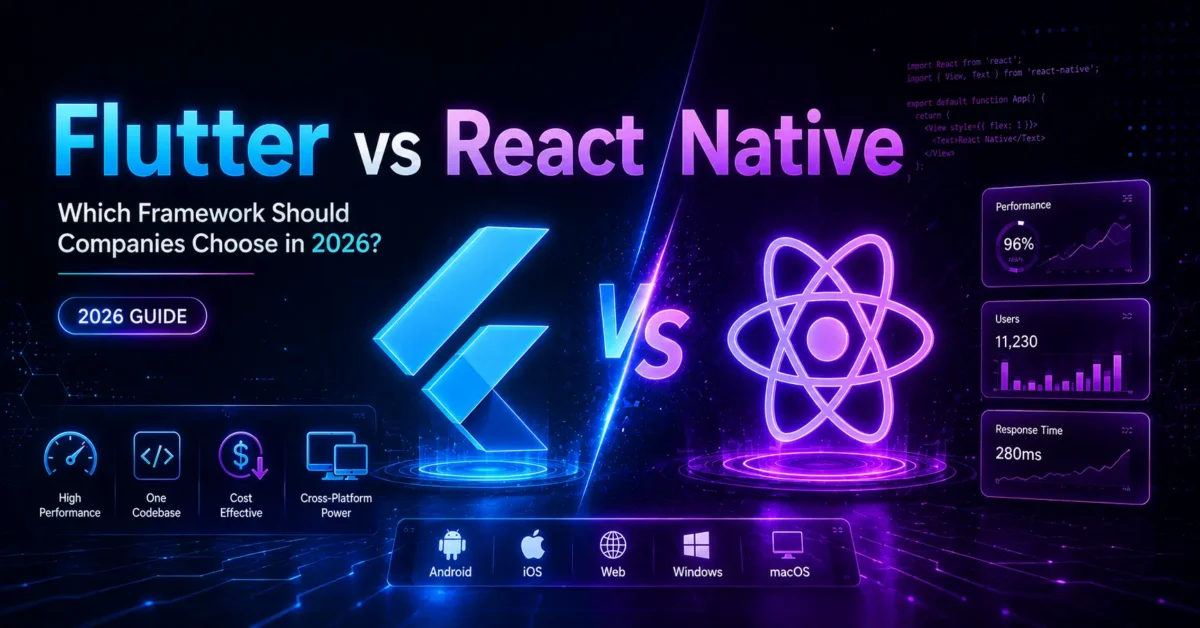
Consequently, Flutter and React Native have their own features and benefits, but if you’re confused about choosing one of them, don’t worry. Here, we’ve a clear explanation of what is Flutter development along with Flutter vs React Native in 2026, including their advantages and disadvantages.
Flutter and React Native are two popular frameworks used to build mobile apps for multiple platforms
Flutter helps developers create apps for Android, iOS, and other platforms using one codebase
React Native allows developers to build apps with a native-like experience using JavaScript
Both frameworks help businesses build apps faster and save development time and cost
What is Flutter?
Open-source mobile app development platform created by Google in May 2017. Flutter is an object-oriented language that develops apps that can run effectively on multiple platforms with equal dynamicity, such as Android, iOS, Linux, Mac, Windows from a single codebase.
Flutter is one of the best cross-platform app development frameworks available in the marketplace, and many developers are also exploring what is Flutter Flow to simplify app development.
Utilize the Flutter’s built-in components such as Cupertino widgets, motion APIs, material design to gain an excellent user experience on your mobile apps.
Single codebase for 6+ platforms: Android, iOS, Web, macOS, Windows, Linux, embedded (IoT devices)
Built-in design systems: Material Design 3 and Cupertino widgets ship out-of-the-box
Excellent for MVPs and startups: teams can ship in weeks, not months
Firebase integration is seamless: Google’s ecosystem advantage
Hot reload + AI-assisted coding: Claude, GitHub Copilot, and Codeium support
Dart/Flutter✓ Growing talent pool: 2.2M+ Flutter developers by end of 2025
Lower app size: improved tree-shaking reduces bloat compared to 2022
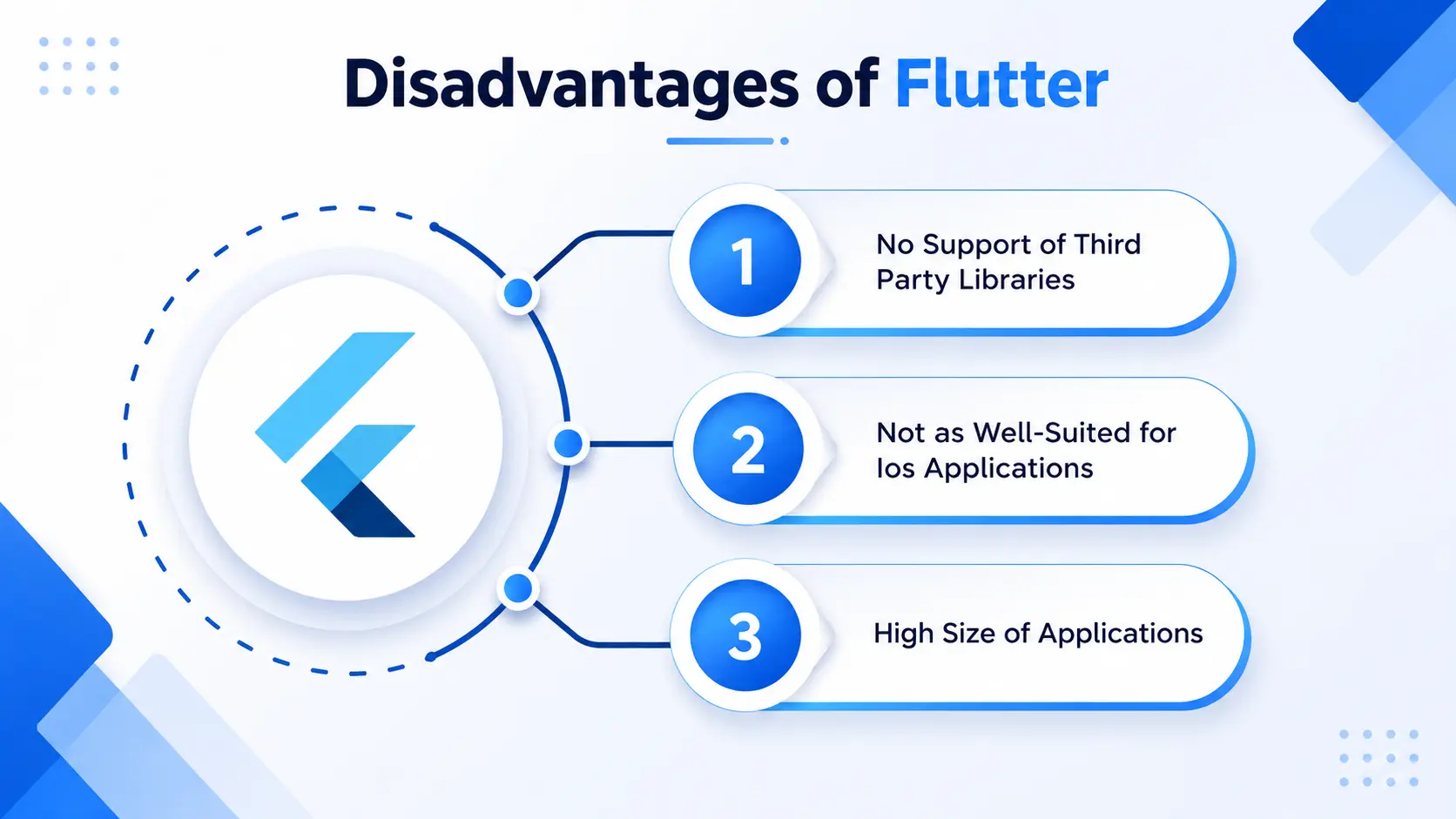
Disadvantages of Flutter
Dart has a smaller ecosystem: fewer third-party packages than JavaScript (though improving)
iOS native features lag: Camera, NFC, and health data APIs often require platform channels
Smaller job market: fewer open roles vs. React Native (still growing, but slower)
Learning curve for Android/iOS engineers: Dart isn’t in their traditional toolkit
What are the New Features of Flutter in 2026?
AI-powered code generation: Flutter AI assistants auto-scaffold Material 3 & Cupertino components
Impeller graphics engine now default: replaces Skia, 30–50% performance boost for 3D/animations
Native asset compilation: Flutter now integrates C/Rust FFI faster than ever
Web reached production parity: Flutter for web now rivals traditional React SPAs
Enhanced tooling: DevTools now includes AI profiling suggestions
Broader platform support: Official support for embedded Linux, RISC-V (IoT revolution)
What is React Native?
Popular cross-platform app development framework for both iOS and Android and it was created by Facebook in 2015. Built on JavaScript and is used to write real code and give a native-like feel to mobile applications.
You can create mobile apps for multiple platforms like Android, iOS, Web, and Windows, with a single code base in React Native.
As it is built on JavaScript, it becomes easier for the developers to build intuitive UI interfaces using React Native development. It focuses on UI to a great extent rendering a highly responsive interface.
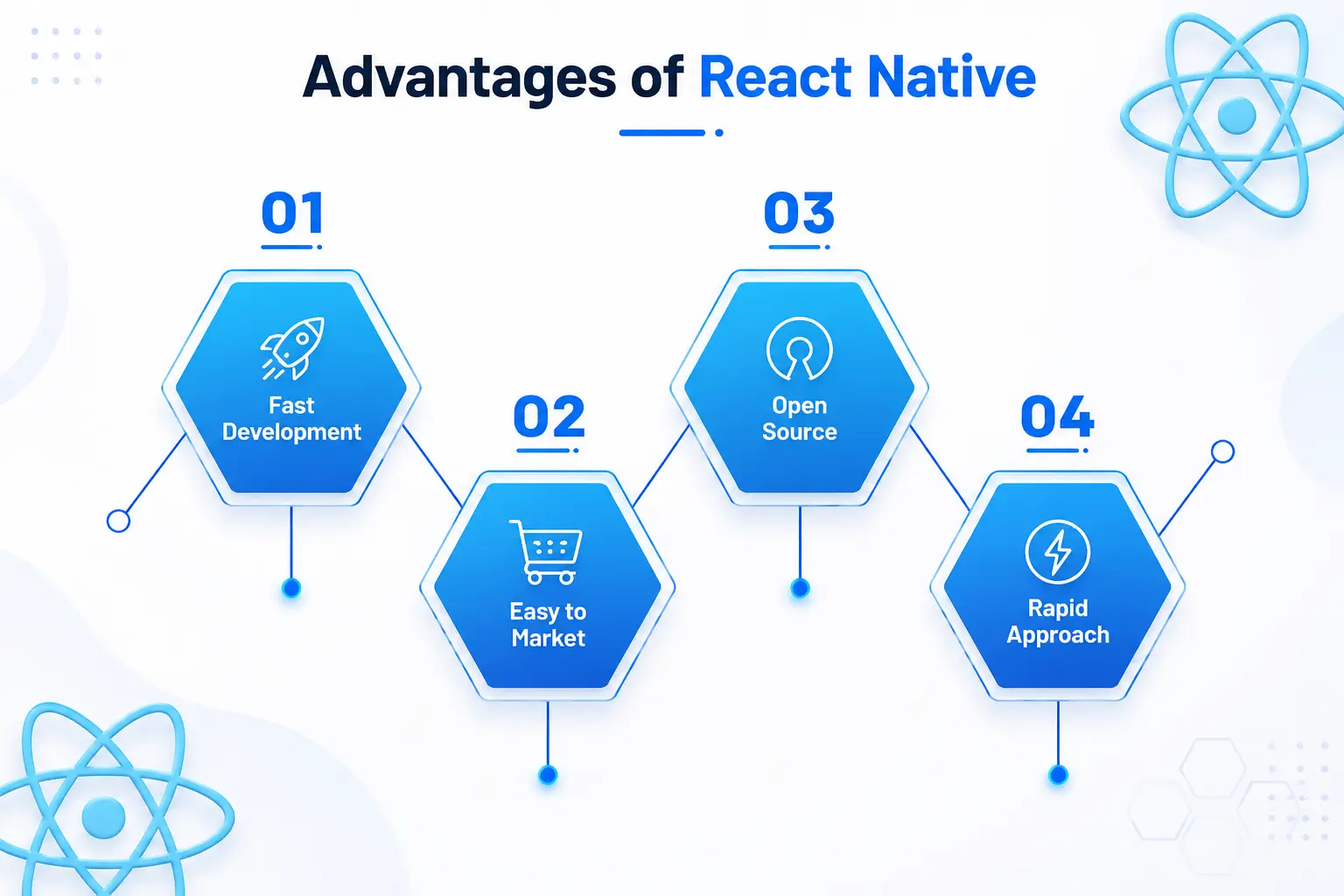
Advantages of React Native
Largest JavaScript ecosystem: npm offers 2M+ packages vs. pub (Dart’s package manager)
Web-to-mobile convergence: React code reusability across web/mobile/desktop
Faster hiring: 8.5M+ JavaScript developers; React Native talent is everywhere
Mature third-party integrations: Stripe, Amplitude, Firebase work seamlessly
Expo platform matured: apps can deploy to App Store/Play Store without native compilation (most cases)
AI code generation works best here: GitHub Copilot, Claude, ChatGPT know React/JavaScript patterns intimately
Strong community & resources: Stack Overflow, forums, courses, tutorials are abundant
Cost-effective for large teams: JavaScript developers can jump in immediately
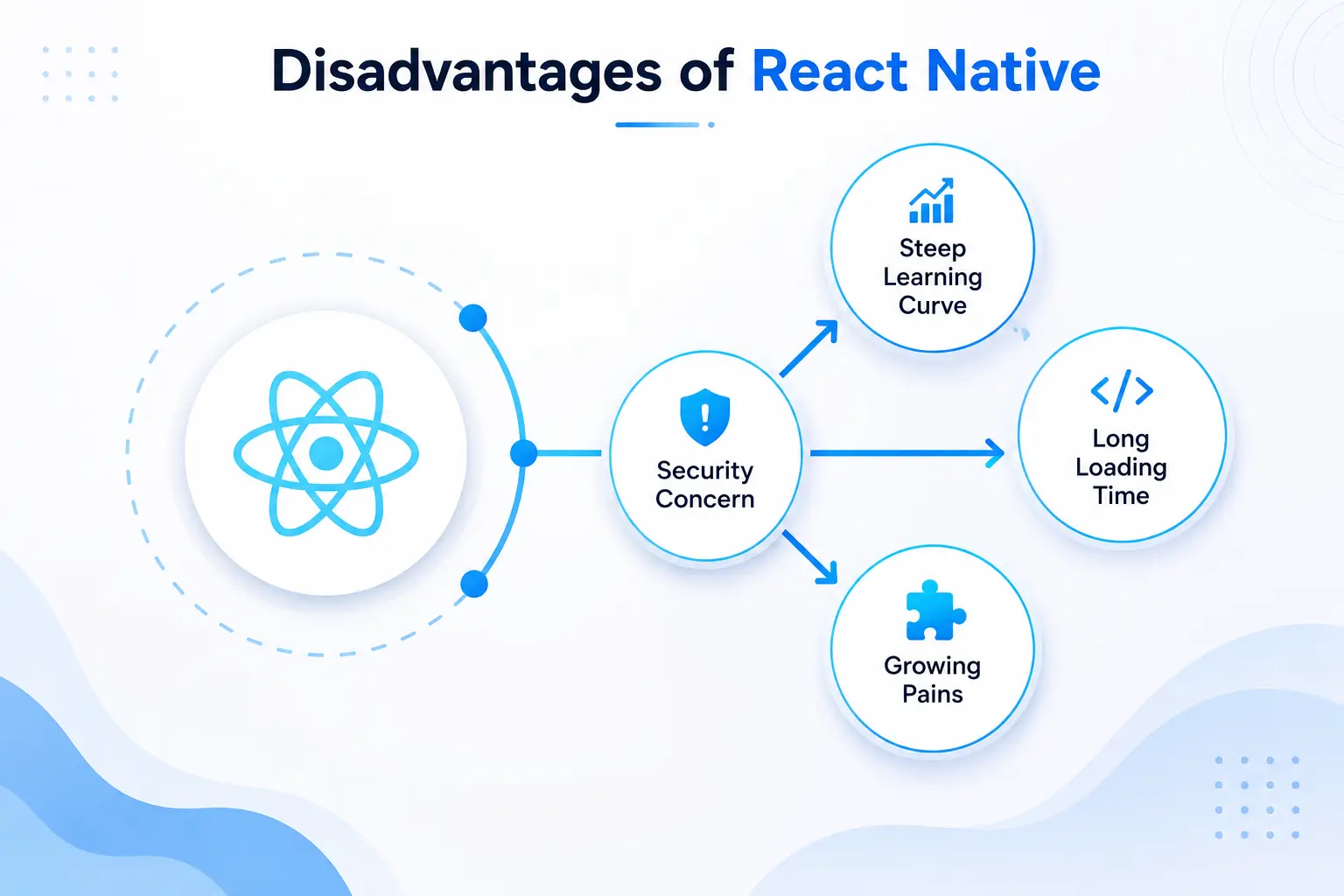
Disadvantages of React Native
Performance ceiling: still 15–20% slower than Flutter for CPU-intensive tasks
Complex native debugging: when JavaScript fails, tracking native issues is painful
Dependency hell: npm ecosystem fragmentation means more breaking updates
Hermes engine dependency: optimizations require opting into the Hermes runtime
What are the New Features of React Native in 2026?
New Architecture fully stabilized: Bridgeless React Native reduces JavaScript overhead
TypeScript becomes default: the community largely migrated away from plain JavaScript
Expo SDK 60+: managed Expo workflow now rivals native complexity for 95% of use cases
AI-driven testing: Automated test generation using Claude/ChatGPT reduces QA burden
Metro bundler optimizations: Faster cold starts, better tree-shaking
Monorepo tooling matured: Nx, Turbo, and Yarn workspaces make scaling easier
Multi-platform web components: React Native Web now integrates with Next.js/React Server Components
React Native vs Flutter: Performance Comparison (2026)
Metric
Flutter
React Native
Winner
App startup time
1.2s (cold)
2.1s (cold)
Flutter
Frame rate (complex UI)
55–60 fps
50–55 fps
Flutter
App size (baseline)
25 MB
50 MB
Flutter
Time-to-production (team with JS)
12–16 weeks
8–10 weeks
React Native
Native feature coverage
92%
96%
React Native
Bundle size (web build)
2.1 MB
1.8 MB
React Native
Developer experience (team with Dart)
Excellent
Learning curve
Flutter
AI code generation quality
78%
89%
React Native
React Native vs Flutter Which is Best?
In the comparison of Flutter vs React Native performance, the Flutter is ideal to enhance the performance, scalability, developing cost, app features, and more. Even so, React Native is also notably special when it comes to building a mobile app with seamless performance.
Let’s utilize this article before choosing Flutter or React Native for your mobile app development in 2026 to obtain enormous growth and to increase brand reach for your business.
Which Should Teams Choose in 2026?
Choose Flutter If:
Performance is non-negotiable: finance apps, real-time gaming, AR/VR experiences
Multi-platform consistency is required: shipping identical UI across all 6 platforms
The team knows Dart or is willing to learn: Dart is simple; adoption curve is gentle
An MVP needs to ship fast: Flutter’s hot reload + AI assistance is unbeatable
App size needs to be minimized: IoT, wearables, low-end Android devices
Firebase/Google Cloud is the backend: native integration means fewer headaches.
Choose React Native If:
The team already has JavaScript expertise: existing skills can be leveraged immediately
Web parity matters: React Native Web means one codebase for web + mobile
Hiring talent is critical: JavaScript developers are everywhere in 2026
Integration with the npm ecosystem is a priority: Stripe, analytics, social SDKs
Maximum native feature coverage is needed: iOS HealthKit, ARKit, CallKit, etc.
Rapid prototyping with AI assistance is a goal: LLMs understand React/TypeScript better
Most Frequently Asked Question
Yes. Impeller engine stability, New Architecture in React Native, and billion-dollar apps in both mean production readiness is guaranteed.
React Native has a larger overall community (8.5M JS devs vs. 2.2M Flutter devs), but Flutter’s community is growing 2.3x faster year-over-year.
Yes, but they should expect 6–12 month rewrites. Choosing wisely upfront matters.
Flutter for Web and React Native Web are both mature in 2026. The choice depends on the backend ecosystem.
Both. Claude, GitHub Copilot, and ChatGPT support Flutter (Dart) and React Native (JavaScript/TypeScript).
Most start by weighing their team’s current skills against the app’s complexity and growth plans. A quick proof-of-concept on each side often settles the decision.
 ChatGPT
 Grok
Grok
 Perplexity AI