ChatGPT
 Grok
Grok
 Perplexity AI
ChatGPT
Grok
Perplexity AI
Perplexity AI
ChatGPT
Grok
Perplexity AI
4 min read | By Muhammed Irbaz | 26 June 2026 | Artificial Intelligence
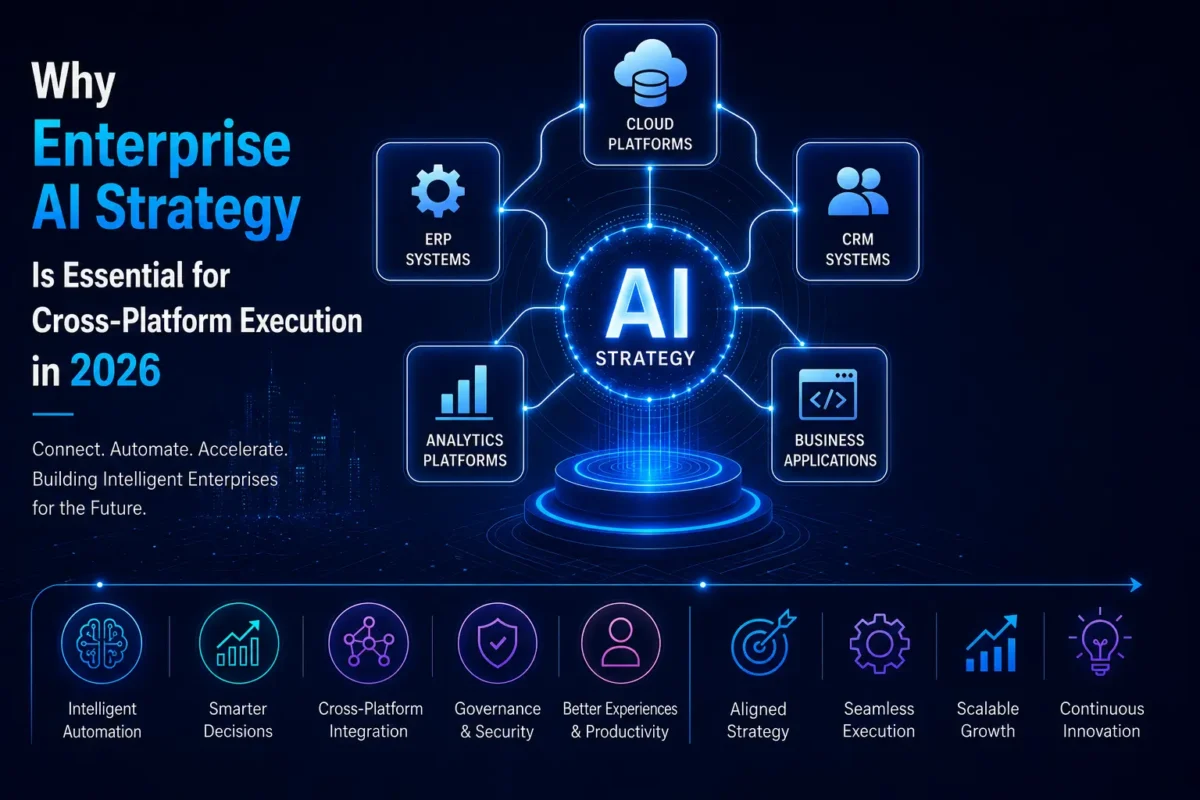
Enterprise AI strategy is essential for cross-platform execution because it enhances organizations to unify systems, automate workflows, improve decision-making skills, and scale AI initiatives across global business environments.
By coordinating advanced AI engines, automated systems, and enterprise-grade agents, modern companies build a scalable foundation for cross-platform execution. Investing in an authoritative AI framework allows businesses to clear legacy bottlenecks and ensure sustainable operational agility.
● Enterprise AI solutions connect systems, reduce data silos, and improve operational efficiency across the organization.
● AI orchestration enables enterprises to manage AI models, workflows, and data across multiple platforms.
● Enterprise AI adoption increases productivity, enhances customer experiences, and supports business growth through intelligent automation.
● A unified AI framework improves governance, security, and scalability, enabling organizations to expand AI initiatives across multiple business functions with greater control.
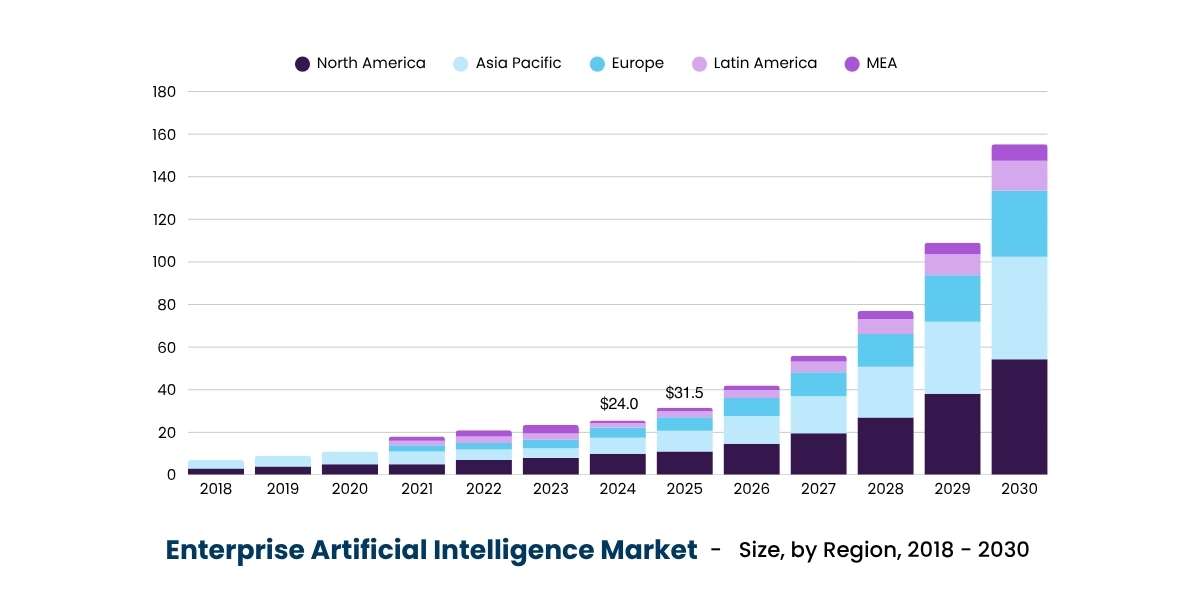
The global enterprise AI market is expected to grow from USD 23.95 billion in 2024 to USD 155.21 billion by 2030, driven by increasing AI adoption and automation.
Source: Grandviewresearch
A well performing enterprise AI platform and solid strategy is important for businesses because it provides a structured approach to adopt artificial intelligence across operations, platforms, and decision-making processes.
It helps organizations automate workflows, improve efficiency, and use data-driven insights for better outcomes. A strong AI strategy ensures that AI investments align with business goals while supporting scalability, security, and innovation.
By implementing enterprise AI solutions, companies can reduce operational challenges, enhance customer experiences, and create smarter processes. It also helps businesses build a foundation for successful enterprise AI adoption and long-term digital transformation.
AI strategy improves enterprise execution by connecting systems, automating workflows, and enabling faster, data-driven business decisions.
Enterprise AI platforms allow organizations to deploy AI models, automate tasks, and improve collaboration between different business functions. AI improves enterprise execution through:
Centralized AI platforms and artificial intelligence implementation allow companies to deploy advanced algorithms, automate repetitive tracking, and streamline cross-department operations. AI systems improve corporate execution across five core areas:
● Automated Decision Support:
Gives operational leaders real-time, data-backed insights to reduce
● decision-making times.
Accelerated Process Automation: Streamlines repetitive data entry and system handoffs to shorten cycle times.
● Predictive Analytics Engines:
Maps historical performance patterns to forecast market shifts and inventory demands accurately.
● Intelligent Workflow Management:
Automatically routes tasks and resources based on real-time operational priorities.
● Dynamic Customer Experiences:
Personalizes interaction touchpoints continuously using live consumer behavior data.
With advanced artificial intelligence and business strategy for enterprise, businesses can automate complex tasks such as customer support, reporting, data analysis, and operational monitoring. These AI agents act as intelligent assistants that improve productivity and reduce workload.
A successful artificial intelligence implementation requires a clear roadmap that includes technology selection, data preparation, employee adoption, and continuous optimization.
Cross-platform AI solutions improve business operations by integrating data, applications, and workflows across multiple systems to increase efficiency and collaboration.
Companies need enterprise AI solutions because they support:
● Unified data management
● AI connects information from different platforms and creates better visibility.
● Automated workflows
● Businesses can automate repetitive tasks across systems.
● Improved scalability
● AI solutions can adapt as business requirements grow.
● Faster innovation
● Organizations can quickly develop new AI-powered business solutions.
An AI orchestration platform plays a major role in managing multiple AI models, applications, and workflows. It enables enterprises to coordinate AI operations across different platforms while improving reliability and performance.
When enterprises integrate AI into business operations, they automate processes, enhance decision-making, and create more connected and intelligent operations.
Instead of using AI as a standalone technology, integration allows businesses to connect data, automate processes, and improve decision-making across departments. With effective, best ai strategy advisory firms for global enterprises companies can enhance operational efficiency, deliver personalized customer experiences, and gain real-time business insights.
AI integration and AI implementation process also supports seamless communication between multiple platforms, helping enterprises reduce data silos and improve collaboration. As businesses move toward digital transformation, integrating generative artificial intelligence strategy into core operations becomes essential for creating scalable, agile, and competitive business environments. A strong integration approach helps organizations maximize the value of AI while ensuring sustainable growth.
Enterprise AI adoption improves productivity, operational efficiency, customer experiences, and business scalability through intelligent automation by integrating a generative artificial intelligence strategy into daily operations. The key benefits include:
AI automates repetitive tasks, streamlines workflows, and reduces manual effort across business processes.
AI analyzes large volumes of data and provides valuable insights that help leaders make faster, data-driven decisions.
AI enables personalized recommendations, faster support, and improved customer engagement.
AI-powered tools and automation allow employees to focus on strategic tasks while improving overall performance.
Enterprise AI solutions help organizations adapt to changing business needs and support future growth.
Automation and intelligent processes help businesses optimize resources and improve cost efficiency.
AI adoption enables companies to develop new products, services, and AI-powered business solutions.
The future of enterprise AI in 2026 will be driven by intelligent automation, AI orchestration, enterprise AI agents, and responsible AI governance. Organizations will increasingly adopt enterprise AI platforms and AI agents to improve decision-making, automate complex workflows, and enhance productivity. Businesses will prioritize responsible AI practices through strong governance frameworks while expanding the use of AI-powered business solutions. As AI technology evolves, enterprises that invest in scalable AI strategies will gain better agility, innovation, and competitive advantages in the digital economy.
An enterprise AI strategy helps organizations connect systems, automate workflows, improve decision-making, and scale innovation across multiple business platforms. By combining enterprise AI solutions, AI orchestration, and governance frameworks, businesses can achieve sustainable digital transformation and long-term competitive advantages.
From enterprise AI platforms and AI orchestration to governance frameworks, organizations need a structured approach to maximize AI for business strategy value. A successful ai for business strategy enterprises enables organizations to transform operations, improve decision-making, and achieve sustainable growth.
As AI continues to evolve, enterprises that develop a strong artificial intelligence and business strategy will be better prepared to adapt, scale, and succeed in the future.
An enterprise AI strategy is a structured plan that helps organizations implement artificial intelligence across business functions, align AI initiatives with goals, and drive scalable digital transformation through data-driven decision-making.
Enterprise AI solutions improve business performance by automating workflows, enhancing operational efficiency, reducing manual effort, and delivering real-time insights that support faster and more accurate decisions.
An AI orchestration platform coordinates AI models, data pipelines, workflows, and enterprise applications from a centralized environment. It helps organizations manage AI operations efficiently while improving scalability and performance.
Enterprises can successfully adopt AI by creating a clear enterprise AI strategy, establishing governance policies, preparing high-quality data, selecting the right enterprise AI platforms, and continuously optimizing AI initiatives.
AI agents for enterprise automate complex tasks such as customer support, data analysis, reporting, and workflow management, helping businesses improve efficiency while reducing operational workload.
An enterprise AI governance framework helps organizations manage AI responsibly by establishing policies for security, compliance, transparency, and risk management while supporting sustainable AI implementation at scale.
Join over 150,000+ subscribers who get our best digital insights, strategies and tips delivered straight to their inbox.