ChatGPT
 Grok
Grok
 Perplexity AI
ChatGPT
Grok
Perplexity AI
Perplexity AI
ChatGPT
Grok
Perplexity AI
4 min read | By Admin | 03 March 2026 |
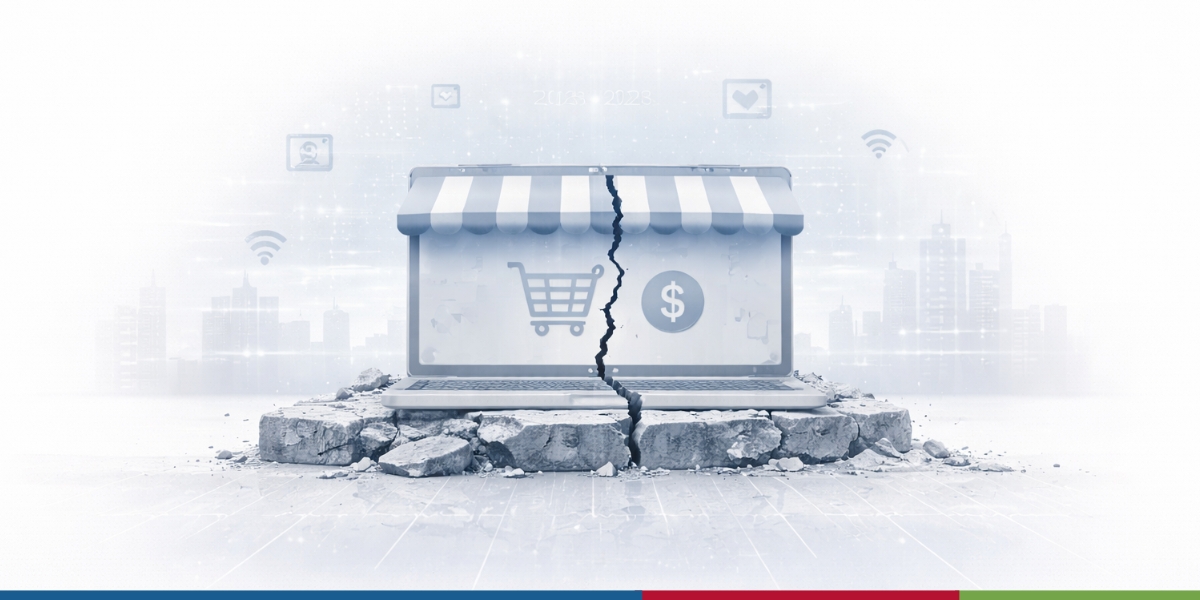
Digital ecommerce in 2026 is more than just having an online store. It is about speed, personalization, automation, and seamless customer experience in ecommerce. The fact is that companies that are still using legacy ecommerce platforms are increasingly finding it difficult to compete in the fast-moving digital world. These platforms may have fueled the initial success of online businesses, but today they are the source of limitations that can stifle innovation, scalability, and visibility.
In order to understand why legacy ecommerce platforms are not working for digital growth in 2026, it is important to discuss the trends shaping the world of commerce, the differences between old and new systems, the role of ecommerce growth strategies, and the ecommerce challenges companies face when they delay modernization.
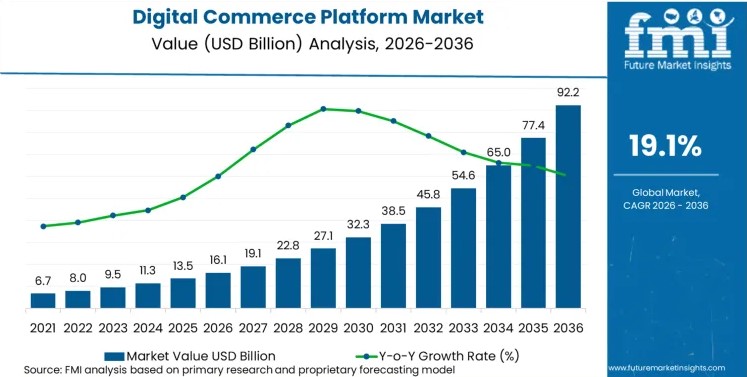
Source: Grandviewresearch
Ecommerce in 2026 is driven by intelligence, integration, and instant experiences. Customers expect brands to understand them, respond quickly, and deliver consistently across devices making ecommerce digital transformation essential for sustainable growth.
Artificial intelligence now drives product recommendations, dynamic pricing, predictive search, and personalized marketing campaigns. Static product pages are no longer enough.
Customers move between websites, mobile apps, social media, and marketplaces. Businesses must offer a unified experience across all channels.
The latest systems enable a clear separation between the front-end and back-end, making it easier to design and integrate.
Business decisions are now based on real-time performance, customer behavior, and predictive analytics, unlocking key composable commerce benefits for modern enterprises.
Handling traffic during promotions or seasonal events demands scalable infrastructure that automatically adjusts without any downtime.
| Aspect | Legacy Ecommerce Platforms | Modern Cloud Commerce |
|---|---|---|
| Architecture | Monolithic architecture where the front-end and back-end are tightly coupled, and it is difficult to make changes. | Modular and API-based architecture that provides flexibility and the ability to customize quickly. |
| Infrastructure | Usually deployed on rigid or on-premise servers that are not scalable. | Cloud-native infrastructure that scales automatically depending on the traffic demand. |
| Scalability | Difficult to handle sudden traffic spikes; risk of downtime during peak sales. | Handles large traffic easily with dynamic scaling and performance stability. |
| Updates & Maintenance | Requires manual updates, patches, and upgrades involving the developer. | Automatic updates and maintenance by the cloud provider. |
| Integration Capabilities | Has limited APIs and may need coding for integration. | Smooth integration with other tools through standardized APIs. |
| Performance & Speed | Slower performance because of outdated code architecture and resource-intensive systems. | Optimized for speed with modern infrastructure and content delivery networks. |
| SEO Flexibility | Limited control over URLs, meta data, and site structure. | Advanced SEO customization with better control over technical elements. |
| Cost Structure | High upfront infrastructure and maintenance costs. | Predictable subscription pricing with operational expenses. |
Search engine optimization remains critical for digital growth. However, many legacy ecommerce platforms create technical SEO problems that limit visibility, especially when businesses try to implement ai in ecommerce without upgrading outdated systems.
By 2026, the legacy e-commerce platforms are no longer able to support the speed, ecommerce scalability and innovation that the digital growth of a business requires. The legacy architecture is limiting the performance, SEO, and adaptability to the evolving customer expectations.
The cloud ecommerce platforms have the flexibility, automation, and scalability that a business needs in order to keep up with the rapidly changing digital environment. Businesses that invest in platform modernization are building a better foundation for sustainable growth, while those that continue to use legacy platforms risk being left behind.
Join over 150,000+ subscribers who get our best digital insights, strategies and tips delivered straight to their inbox.