ChatGPT
 Grok
Grok
 Perplexity AI
ChatGPT
Grok
Perplexity AI
Perplexity AI
ChatGPT
Grok
Perplexity AI
4 min read | By Admin | 05 January 2022 | Frameworks
In today’s global business environment, countless businesses are investing in mobile apps to obtain their marketing value and to provide effective outcomes for their target customers.
If you’re planning to build an app for your business, it is good to start with knowing the best framework to build a scalable mobile app. There are a lot of popular frameworks available to choose from but have to consider the best one.
Hence in this year of 2026, React Native and Flutter are ideal frameworks to build an app with required business goals to boost brand recognition and improve the overall visibility of the business.
Consequently, Flutter and React Native have their own features and benefits, but if you’re confused about choosing one of them, don’t worry. Here, we’ve a clear explanation of what is Flutter development along with Flutter vs React Native in 2026, including their advantages and disadvantages.
Let’s begin with this andchoose your best framework to build your app in 2026.

Open-source mobile app development platform created by Google in May 2017. Flutter is an object-oriented language that develops apps that can run effectively on multiple platforms with equal dynamicity, such as Android, iOS, Linux, Mac, Windows from a single codebase.
Flutter is one of thebest cross-platform app development frameworksavailable in the marketplace, and many developers are also exploring what is Flutter Flow to simplify app development.
Utilize the Flutter’s built-in components such as Cupertino widgets, motion APIs, material design to gain an excellent user experience on your mobile apps.
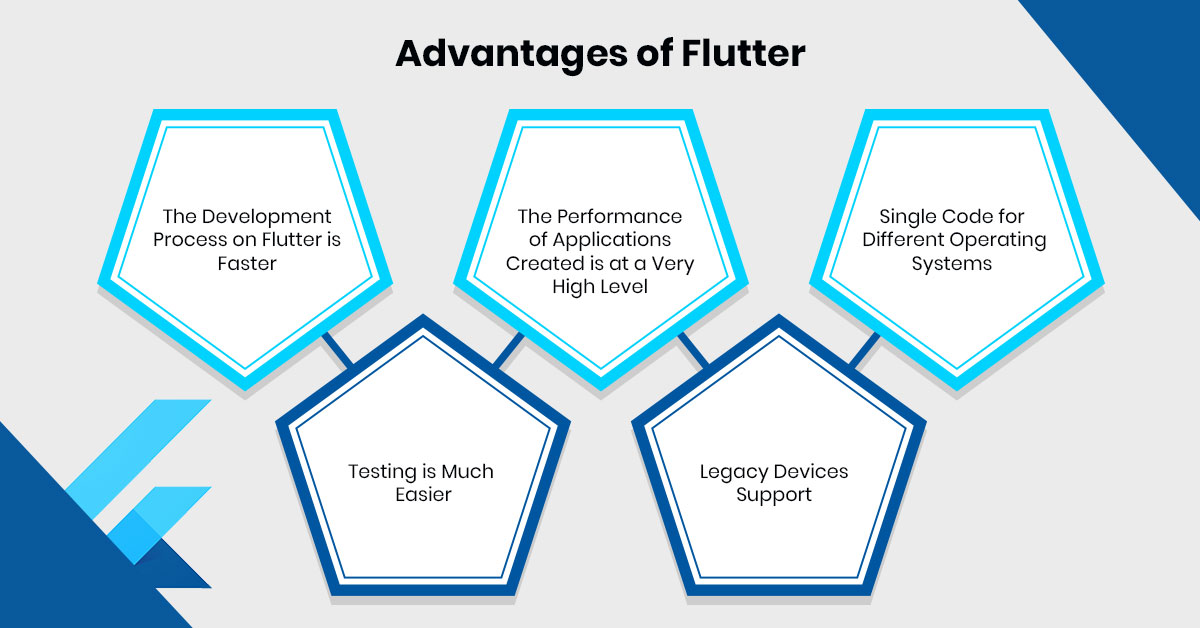
⒈ Faster development and saves a lot of time
⒉ Flutter has an inbuilt graphic engine
⒊ It is an ideal framework for MVP development
⒋ Flutter promotes portable GPU, which renders UI power
⒌ Flutter allows sharing of both UI code on all platforms
⒍ It also separates UI from native controls
⒎ Full customisation & fast rendering
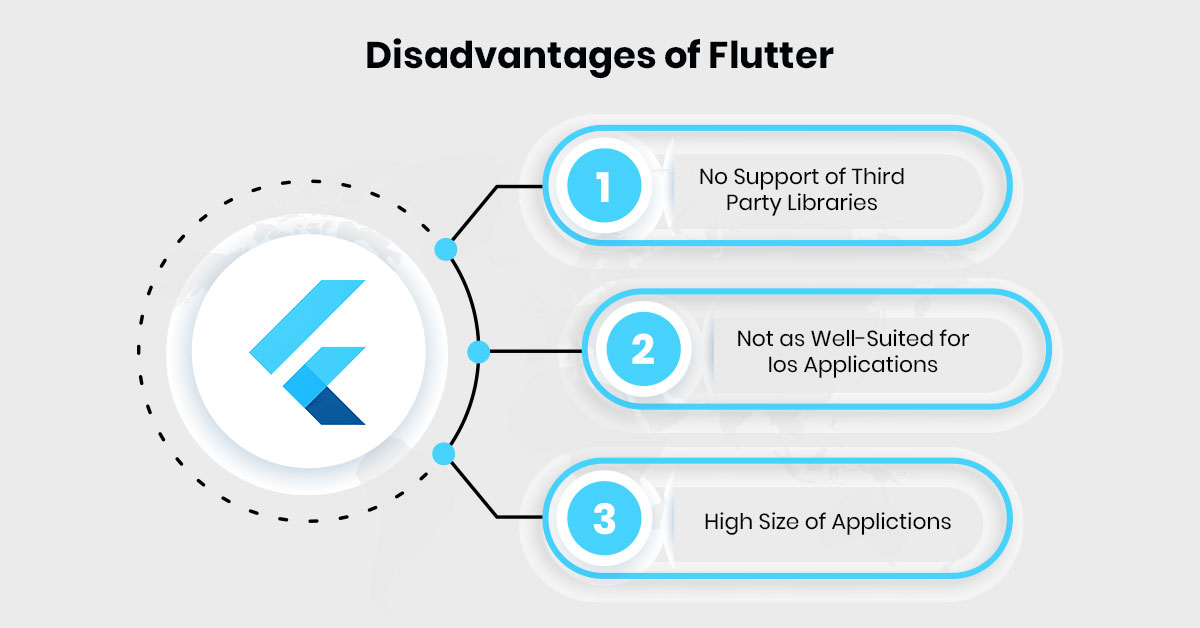
⒈ Flutter is still an immature framework
⒉ Look & feel is not 100% the same as with native solutions
⒊ A limited set of tools and libraries
⒋ Flutter apps are quite large and heavy
⒌ Weak iOS features support

• Speedy Cross-Platform app development
• Uncountable Open-source Packages
• Impressive and Personalized Widgets
• Flawless Firebase Integration & amazing 2D Glare
• Single Code-base For Various Platforms
• Flutter is amazing for MVPs
• Easy Adaptation and Compatibility
Popular cross-platform app development framework for both iOS and Android and it was created by Facebook in 2015. Built on JavaScript and is used to write real code and give a native-like feel to mobile applications.
You can create mobile apps for multiple platforms like Android, iOS, Web, and Windows, with a single code base in React Native.
As it is built on JavaScript, it becomes easier for the developers to build intuitive UI interfaces using React Native development. It focuses on UI to a great extent rendering a highly responsive interface.
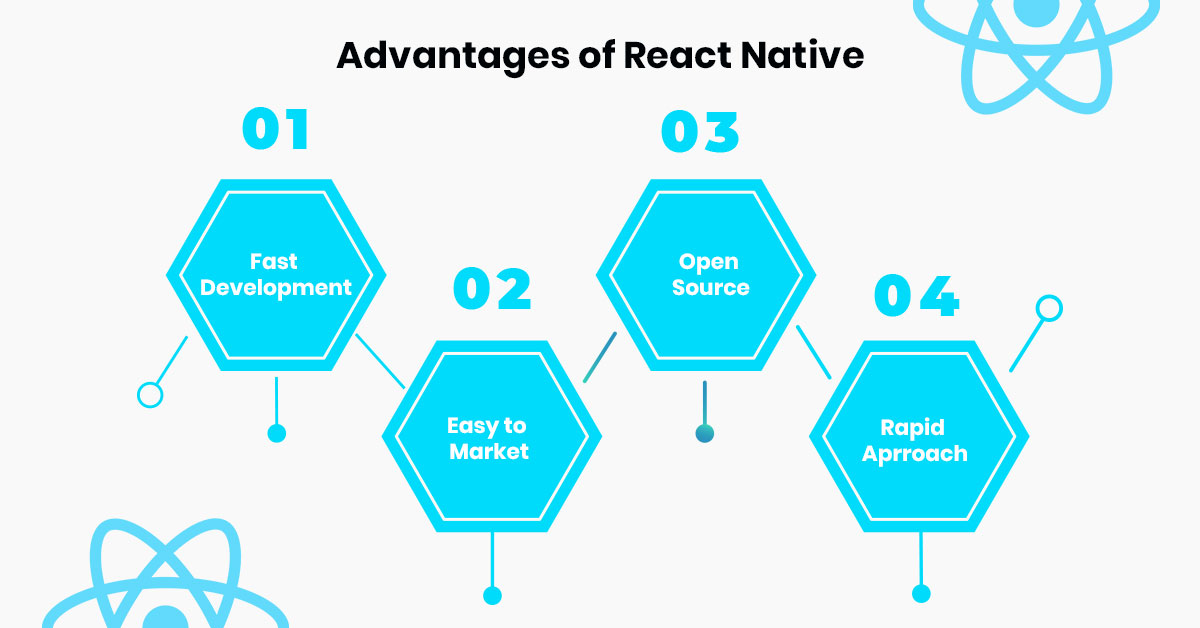
⒈ Offers faster development to build apps for multiple platforms
⒉ Compatible with all the leading third-party plugins
⒊ One-time coding instantly reduces the development time
⒋ Fast refresh enables developers to check all the changes instantly
⒌ Cost-effective as it saves time and money
⒍ Increased Stability and Reliability
⒎ Access to Libraries and Ready-made Solutions
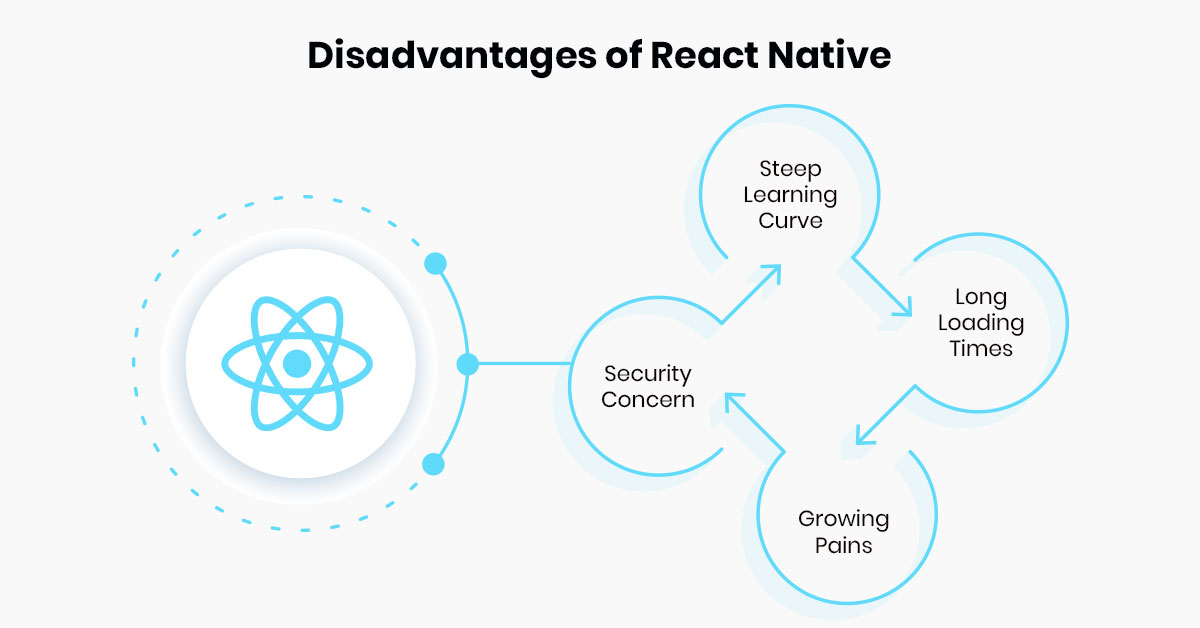
⒈ Difficult to Learn
⒉ Immaturity
⒊ Low security
⒋ Complex UI
⒌ Longer initialization time
⒍ Memory management
• Minimized development time & cost
• Support for 3rd party libraries
• Easier cross-device user experience
• Reusable dynamic platform components
• NPM for installation
• Easy third-party integrations
• Hot reloading feature
In the comparison of Flutter vs React Native performance, the Flutter is ideal to enhance the performance, scalability, developing cost, app features, and more. Even so, React Native is also notably special when it comes to building a mobile app with seamless performance.
Let’s utilize this article before choosing Flutter or React Native for your mobile app development in 2026 to obtain enormous growth and to increase brand reach for your business.
In a nutshell, if your budget is low or you can build a simple application quicker, you should choose Flutter. If you have enough funds and want to build a complex application, go with React Native.
When it comes to better performance, Flutter takes the crown as it is much faster than React Native
React Native quietly compiles the app with the Javascript engine at the end. Flutter applications have no JavaScript runtime, and Flutter uses binary messaging channels to generate a two-way communication stream between the dart and the native code.
Compared to Flutter vs React Native, Flutter is better at improving performance, scaling, utility features and more. Nevertheless, React Native is notable when building a mobile app with uninterrupted performance.
Flutter ranks higher with 75.4% and React Native also made the cut with 62.5% among most loved frameworks.
Join over 150,000+ subscribers who get our best digital insights, strategies and tips delivered straight to their inbox.