ChatGPT
 Grok
Grok
 Perplexity AI
ChatGPT
Grok
Perplexity AI
Perplexity AI
ChatGPT
Grok
Perplexity AI
4 min read | By Admin | 03 February 2026 |
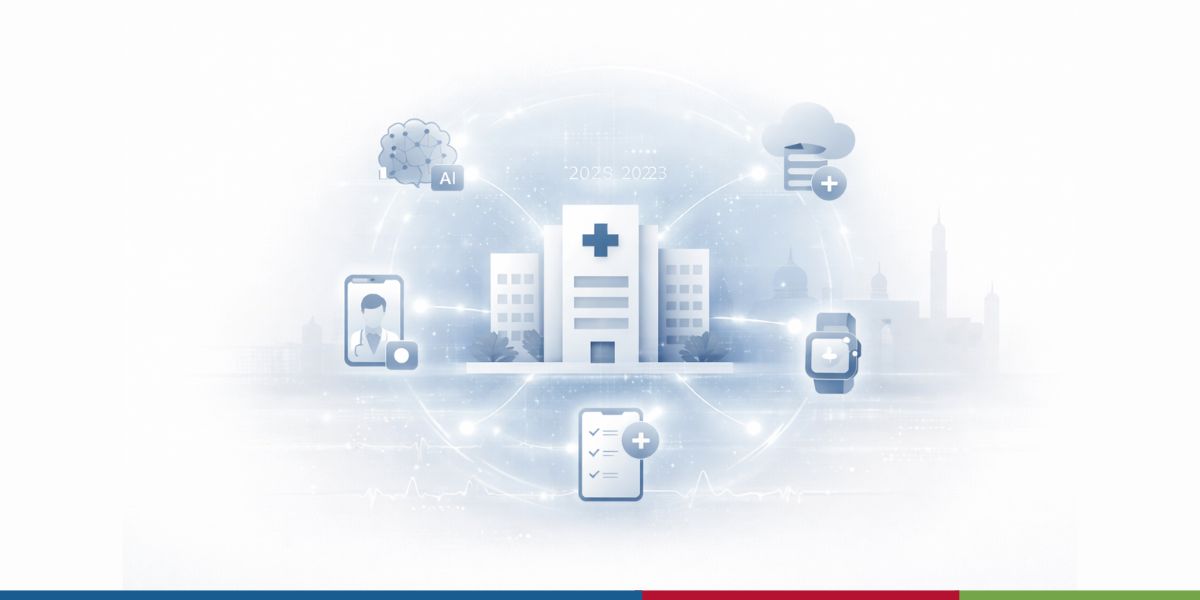
The Gulf Cooperation Council (GCC) is presently experiencing a paradigm shift in the planning, delivery, and experience of healthcare services. This is a result of the growing population, increasing chronic diseases, and the vision of the region’s governments to transform the healthcare sector digitally. As we move towards 2026, Healthcare digitization trends in GCC is no longer a luxury but a key enabler that is going to shape the future of the healthcare sector.
This is a result of a well-planned healthcare digital transformation strategy GCC that is aligned with healthcare policies, infrastructure, and innovation.
In the GCC, by 2026, the future of healthcare will be established on the basis of innovative technologies. Predictive analytics, robotics, and IoT-based healthcare devices are transforming the approach to healthcare decision-making. Among the most impactful trends in the healthcare technology industry, artificial intelligence is opening doors to diagnosing and treating patients in a more personalized and error-free way.
In particular, the AI in healthcare GCC projects are facilitating radiology reporting, disease prediction models, and smart triage solutions. These developments are part of a larger digital healthcare IT trends that focuses on proactive care rather than reactive treatment. As the adoption of these technologies increases, they are setting the pace that shapes healthcare technology trends GCC.
The hospitals in the GCC are experiencing a transition from traditional healthcare centers to smart spaces. This is being facilitated by the adoption of integrated platforms that connect patient data, diagnostic tools, and hospital operations. The adoption of healthcare automation is making it easier to manage hospitals. This is reducing the chances of errors and allowing healthcare professionals to focus more on patient care.
By embracing smart hospital solutions, healthcare facilities are optimizing bed management, improving infection control, and shortening emergency response times. This is resulting in the fast development of digital hospitals in GCC, where the analysis of data in real time is helping in making faster, safer, and more accurate decisions in the field of medicine. All these developments are the biggest trends in healthcare technology that the GCC has experienced in the last few decades.
The healthcare service providers in the GCC are quickly adopting digital solutions to improve patient care, optimize operations, and support the digital health strategies of their respective countries. With the growing demands of patients, government support, and the development of smart healthcare infrastructure, the GCC is now concentrating on digital solutions that can help in making healthcare more efficient, accessible, and effective. The following are the top five digital solutions that are most widely used in the healthcare sector of the GCC:
These are centralized digital platforms that help in managing patient data efficiently, taking decisions quickly, and performing activities easily between different departments and healthcare facilities.
Digital consultation platforms that allow patients to access doctors remotely, thus relieving hospitals of congestion and enhancing the accessibility of healthcare.
Connected devices and wearables that enable real-time patient vital monitoring, thus facilitating chronic disease management and post-treatment care.
AI-based solutions for diagnostics, medical imaging, predictive analytics, and customized treatment planning to improve clinical precision.
Secure platforms that enable interoperability and real-time data exchange between hospitals, clinics, insurance companies, and government health departments.
Connected devices and wearables that enable real-time patient vital monitoring, thus facilitating chronic disease management and post-treatment care.
Telemedicine has moved from an emergency solution to a long-term healthcare model in the GCC. Virtual consultations, remote diagnostics, and digital prescriptions are improving access to care, especially in rural and underserved areas. These developments reflect accelerating telemedicine trends GCC, supported by government-backed digital health policies.
Telemedicine is changing patient and provider dynamics by minimizing waiting times and the need to travel. Telemedicine is also a crucial factor in the development of smart healthcare GCC initiatives, where technology helps to overcome geographical barriers and provide equal access to healthcare professionals. Thus, telemedicine is becoming an essential part of digital health trends GCC 2026.
The digitization of the healthcare industry is inextricably linked to the smart city vision of the GCC. The convergence of healthcare platforms makes cities more resilient and enables real-time health monitoring. With an integrated infrastructure, the healthcare sector is aligned with transportation, emergency, and environmental systems.
The GCC’s healthcare digital transformation 2026 strategy is supported by this integration, as it fosters an ecosystem that brings together patient care, urban development, and sustainability. Smart healthcare data improves city-wide decision-making, solidifying the importance of the healthcare sector as a vital component of smart city development.
As the GCC approaches the year 2026, it is at the forefront of healthcare innovation globally. The GCC’s emphasis on digital-first strategies in the healthcare sector is transforming the healthcare sector in the GCC. The GCC’s emphasis on smart hospitals and virtual healthcare platforms is ensuring that the digital transformation of the healthcare sector makes it more efficient, inclusive, and sustainable.
The GCC’s strategy for the digital transformation of the healthcare sector A proper strategy for the digital transformation of the healthcare sector in the GCC will ensure that the application and use of technology in the healthcare sector are always patient needs-focused, regulatory requirements-compliant, and development goals-aligned. With its focus on innovation and interoperability, the GCC is not only shaping its own future in the healthcare sector but also setting the benchmarks for excellence in digital healthcare globally.
Join over 150,000+ subscribers who get our best digital insights, strategies and tips delivered straight to their inbox.