ChatGPT
 Grok
Grok
 Perplexity AI
ChatGPT
Grok
Perplexity AI
Perplexity AI
ChatGPT
Grok
Perplexity AI
4 min read | By Admin | 18 February 2026 |
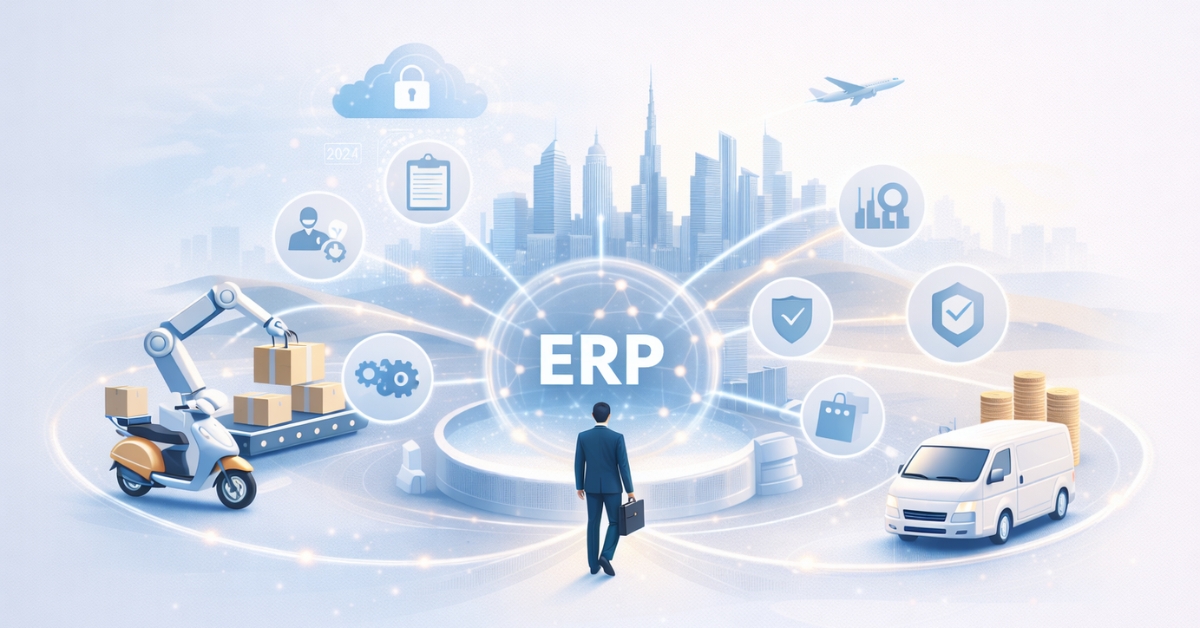
A critical phase of modernization of the enterprises of the Gulf countries is at hand. The countries are developing their digital economies, improving transparency requirements, and becoming increasingly competitive, making the use of technology for growth a pressing challenge. In this regard, the AI driven ERP system of intelligence is a strategic basis for long-term resilience.
ERP systems are no longer viewed as basic accounting engines that are relegated to the background of the enterprise. Instead, they are becoming the real-time operational center of the enterprise, where the enterprise’s finances, supply chains, employees, and customers are integrated. The decisions that the enterprise will make in 2026 will determine the enterprise’s ability to adapt to change for the rest of the decade.
This year is about making the shift from cautious planning to scaled execution. Enterprises are now aligning capital allocation, sponsorship, and transformation governance like never before. New insights gained from ERP adoption trends UAE 2026 indicate that there is an increase in the speed of procurement cycles and broader organizational involvement in ERP strategies.
Meanwhile, industry analysts studying GCC ERP digitization trends 2026 report that there is an increase in the preference for integrated suites compared to standalone applications. The reason is obvious: integrated data enables faster reporting, better forecasting, and improved control.
Large groups with multi-entity structures are especially motivated. These require harmonized processes that are flexible enough to support regional growth without becoming more complex. The capacity to standardize while being flexible is the key to incremental improvement and transformation.
Legacy systems were reliable but failed to deliver the agility required by the current operating environment. Cross-border growth, digital services, and ecosystems require consistent data and standardized processes.
This is the reason ERP digital transformation GCC programs are being prioritized. Modern platforms simplify integration, enhance visibility, and support enterprise-wide governance. Regulatory expectations are equally influential. Finance and compliance leaders must satisfy ERP compliance requirements UAE e-invoicing, particularly as organizations prepare for the operational impact of the UAE e-invoicing ERP mandate. Fragmented tools increase exposure, while unified architectures reduce uncertainty.
Consequently, modernization has become a risk-management strategy as much as a technology initiative.
Technology leadership conversations in 2026 revolve around durability. Investments need to be relevant with the changing business models.
The adoption of Cloud ERP trends 2026 services is increasing with the help of the cloud, which reduces the dependencies on infrastructure. This is similar to the overall Cloud ERP adoption in 2026, where innovation is driven by the benefits of updates and capacity.
From a strategic standpoint, businesses are solidifying the Cloud-first ERP adoption UAE to ensure new implementations meet long-term digital objectives. Rather than developing infrastructures that require significant reinvestment, they are developing infrastructures for improvement.
Intelligence capabilities are also increasing. With AI-powered ERP systems UAE, organizations are enhancing demand planning, cash flow forecasting, and risk management. The final aim is to build an AI-based ERP system of intelligence that would facilitate appropriate suggestions for decision-makers.
Another way in which operational productivity is enhanced is through Hyper automation ERP UAE, which assists in eliminating redundant work so that specialized groups may focus more on in-depth analysis.
The aspiration level is high; however, for organizations that have experience in this area, discipline is key when it comes to planning an ERP project with desired outcomes, sponsorship, and governance.
One key step in the initial phase is understanding how Data sovereignty ERP GCC needs impact hosting, integrating, and security models. Meeting residency and audit needs in the design phase may save costly changes in the future.
Another thing to think about is the pace of deployment. It may also be desirable to roll out the system incrementally, with the performance level being tested in stages, and the business carried out as normal. This can be a very effective way of winning over the users and making tangible progress with the stakeholders.
Investments in training, communication, and analysis may also improve the chances of success and ensure the technology delivers the expected benefits.
By the end of 2026, the best organizations will be using ERP environments that are fit for continuous evolution, as opposed to periodic replacement.
There will be effortless data flow among departments, enabling quicker and better-informed decisions to be made. Intelligence will be built into the system, utilizing the power of AI ERP systems GCC.
Modularity will facilitate innovation. Compliance will be built into the workflow, improving transparency.
In the Emirates, many thought leaders have described this process as a complete Digital transformation ERP UAE, where the technology can enable the aspirations of the nation.
The Cloud ERP solutions GCC region is entering its mature phase, characterized by the clarity of its intentions and the discipline of its delivery. Organizations are looking to invest in scalable platforms to increase visibility, strengthen compliance, and drive innovation.
Enterprises that deliver on this will be able to build digital cores that can accommodate growth and change in the years to come.
The time taken to digitize ERP varies depending on the scope of the project, the complexity of the organization, and the approach to ERP implementation. The implementation of ERP in phases is very effective in managing risks properly.
The sectors that are embracing ERP faster in the GCC region are manufacturing, retail, logistics, healthcare, and construction due to high regulatory and operational complexities.
ERP helps the top management of an organization to have better visibility of the data in real-time, which in turn helps in taking quicker and better decisions.
One of the challenges faced in ERP modernization is change management and data migration.
ERP ROI is determined in terms of improved efficiencies, reduction in manual efforts, better compliance, and faster reporting.
Join over 150,000+ subscribers who get our best digital insights, strategies and tips delivered straight to their inbox.