4 min read | By Postpublisher P | 14 February 2023 | Technology
share on:
Key Takeaways
Digital transformation helps businesses use technology to improve operations, services, and customer
experience
Tools like AI, IoT, cloud computing, and big data help companies work faster and make better decisions
Automation tools like RPA reduce manual work and increase productivity
CRM systems help businesses manage customer relationships and deliver better service
Cybersecurity tools protect business data from cyber threats and attacks
Digital transformation for business is about integrating digital technology into
different stages of business operations. Today digital transformation is an essential aspect for companies to stay up
to date with the latest advancements. With rapidly changing customer expectations, adapting your business to the
required technology is crucial for its survival. In this article, you will have a complete list of the best digital
transformation tools that are expected to be important in the upcoming years.
What is Digital Transformation?
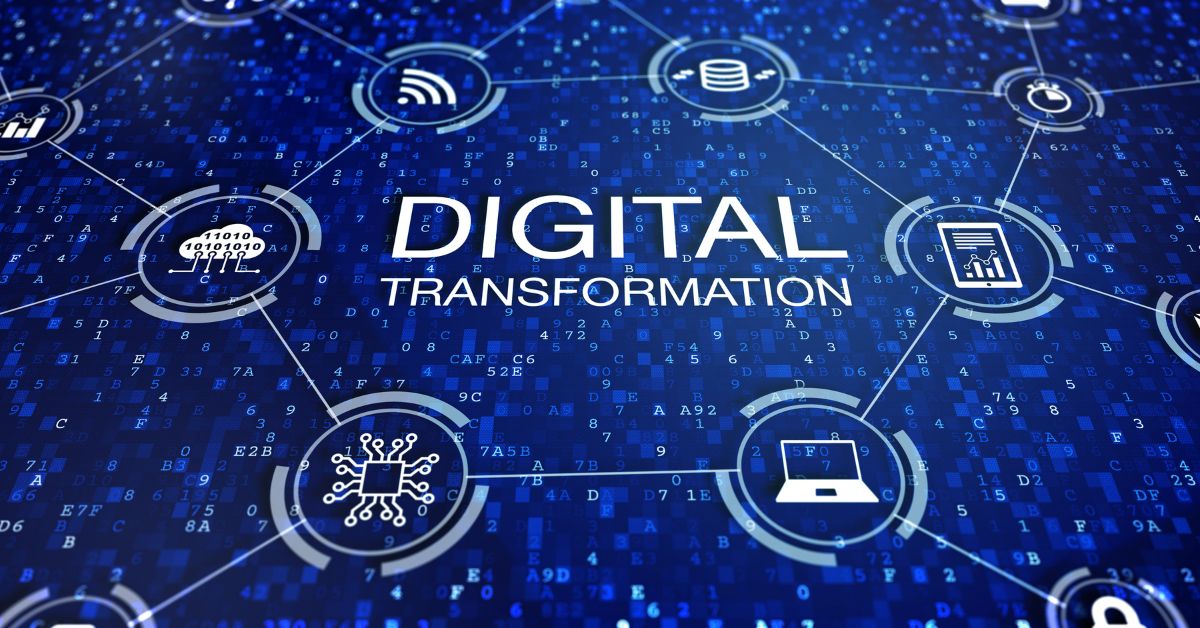
Digital transformation means using digital technology to improve how businesses operate and deliver services to customers. Companies use tools like cloud computing, automation, data analytics, and artificial intelligence to make their processes faster, smarter, and more efficient.
Many businesses adopt digital transformation to improve customer experience, offer online services, and stay competitive in the market. Overall, digital transformation means using digital tools to make businesses more efficient, flexible, and ready for future growth.
10 Best Digital Transformation Tools
1. Artificial Intelligence and Machine Learning
Artificial
intelligence and machine learning technology are one of the most popular digital transformation tools. They use
algorithms and statistical models to analyze vast amounts of data, providing valuable insights for businesses. The
compound annual growth rate is about 52% during the forecast period (2017 – 2025) according to Bussinesswire.
Top Applications:
Customer Service: Most businesses
use Chatbots for the initial business conversation today, freeing up human resources to handle complex problems.
These chatbots are AI-powered tech that understands customer questions and provides automated responses.
Natural Language Processing (NLP):
Siri, Alexa, and now ChatGPT use AI technology to understand and respond to human speech. They can perform tasks
based on voice commands and generate text like humans.
Human Resources: AI is used to
automate HR processes in onboarding such as resume screening, verifying documents, interview scheduling, and
assisting in other activities like training, employee performance evaluation, rewards, etc.
2. Internet of Things (IoT)
Next on the list of digital transformation tools is IoT. It is a network of physical
devices connected over the internet. Not just devices, but also vehicles, and home appliances can be embedded with
electronics, sensors, and software that enables them to connect and exchange data. It is noteworthy that the global
IoT market size will have a growth of 19% in 2023.
Top Applications:
Smart Home Devices: IoT-enabled
devices, such as smart locks, smart lights, and smart thermostats, allow individuals to control and monitor their
homes remotely.
Wearables: Smartwatches and
fitness trackers are now IoT-enabled, allowing individuals to track their health and fitness data.
Retail: Helps monitor product movement where brands can
track products through the complete supply chain process until they reach the customer.
3. Blockchain
Blockchain is increasing in popularity, especially for its decentralized and secure data
management. It has the power to disrupt the status quo of banking and has the potential to replace the current
financial system. From 2023 to 2030, blockchain technology is expected to have a compound annual growth rate (CAGR) of
87.7%.
Top Applications:
Cryptocurrencies: The most
well-known application of blockchain is the creation and exchange of cryptocurrencies, such as Bitcoin, Ethereum,
and Litecoin—an alternative form of payment that uses encryption algorithms.
Supply Chain Management: Blockchain can strictly avoid
unauthorized alterations of transaction records and product movements in a supply chain. This increases
transparency and trust.
Digital Identity Management:
Blockchain helps to securely store and manage digital identities, making it possible to establish a single source
of truth for identity verification.
4. Cloud Computing
Cloud computing is another well-known digital transformation tool for delivering IT
services over the internet. Instead of having to store data and run applications on a local computer or server, users
can access these services and resources remotely over the internet through a cloud service provider.
Top Applications:
Software as a Service (SaaS):
Companies can now use software applications over the internet without installing and managing the software on
their own computers.
Infrastructure as a Service (IaaS): IaaS provides organizations with access to computing infrastructure, such as servers,
storage, and networking, over the internet.
Platform as a Service (PaaS): Companies will be provided with a platform for developing, testing, and deploying
applications without needing to manage the underlying infrastructure.
5. Robotic Process Automation
Robotic Process Automation (RPA) can help companies to automate repetitive, manual, and
time-consuming tasks. It uses software robots (bots) to perform tasks that would normally be done by humans. The
catch? These bots can work 24/7 without the need for breaks or vacations resulting in improved efficiency.
Top Applications:
Data Entry and Processing: Data
entry and processing tasks like copying data from one system to another are done by RPA. It reduces errors and
increases efficiency.
Supply Chain Management: Routine
supply chain management tasks such as tracking inventory levels and generating purchase orders are now
automated.
Accounting and Finance: RPA is now
helpful in accounting and finance tasks too. It’s found that the cost and time for invoicing and expense reporting
are reduced by robotic automation.
6. Big Data Analytics
The large complex data that has the 5 V’s (Variety, Volume, Value, Veracity &
Velocity) is called Big Data. The process of examining these data sets to uncover hidden patterns, correlations, and
other insights to make business decisions is called big data analytics. It improves better decision-making and
efficiency of the company and that’s why Big Data Analytics is a sought-after digital transformation tool.
Top applications:
Customer Analytics: Companies use
big data analytics to understand customer behavior, preferences, and buying patterns, allowing for more
personalized and effective marketing.
Healthcare: Big data analytics improves patient outcomes by
analyzing large amounts of patient data and identifying effective treatment plans.
Financial Services: With big data
analytics, banks can manage risk, detect fraud, and improve customer service by analyzing large amounts of
financial data.
7. Customer Relationship Management:
Customer Relationship Management (CRM) helps organizations manage their interactions
with customers, clients, and sales prospects in one place. These tools deliver a personalized experience resulting in
improved customer satisfaction.
Top Applications:
Sales Management: CRM systems help
sales teams manage leads, opportunities, and deals. It tracks customer interactions and provides insights into
sales performance.
Marketing Automation: Marketing
teams can now manage campaigns, segment, and target potential customers automatically. The marketing effectiveness
can be measured to get better insights.
Customer Service: Customer service
staff can manage customer inquiries, resolve issues, and track customer interactions in one place with CRM
tools.
8. Cybersecurity
Cybersecurity is a process to protect networks, devices, and sensitive information from
cyber threats, such as hacking, phishing, and malware. This is one of the important digital transformation tools,
especially when the security of the business is considered.
Top Applications:
Network Security: To protect
organizations’ networks from unauthorized access and data breaches by implementing security measures like
firewalls, intrusion detection systems, etc.
Endpoint Security: To protect
individual devices from threats such as malware and ransomware by implementing antivirus software.
Cloud Security: To protect data
stored in the cloud from unauthorized access and attacks by implementing security measures such as encryption,
access controls, and network security.
9. Virtual and Augmented Reality:
Virtual Reality (VR) and Augmented Reality (AR) is an innovative digital transformation
tool that brings together a virtual computer-generated world and the real one with 3-D visuals. With Facebook
rebranded as Meta, it is necessary for businesses to be ready to adapt to the new world.
Top Applications:
Gaming: Create exciting gaming
experiences where players can interact with virtual environments in a realistic and interactive way.
Education and Training: Students
can now have interactive and engaging educational experiences to explore subjects and environments in a hands-on
way.
E-commerce: Virtual showrooms can now be made that allow
customers to preview or try products before making a purchase from their homes.
10. 5G
5G is said to have a speed of 10-20 times 4G, providing faster speeds, lower delay, and
greater capacity to perform online tasks. Many industries that we have discussed above will be benefitted greatly from
this technology. Equipping your business with this booming digital transformation tool is indeed necessary to
thrive.
Top Applications:
Mobile Broadband: 5G provides
faster and more reliable mobile broadband, offering faster download and upload speeds and improved network
coverage.
Internet of Things (IoT): 5G is
helpful in connecting and managing billions of IoT devices for smart cities, connected vehicles, and industrial
IoT.
Autonomous Vehicles: Travelling in
driverless cars can be made easy with this high-speed and low-delay connectivity providing real-time
communication.
To Wrap Up:
Digital transformation is a broad term and can mean different things for different
businesses. We believe the above-mentioned digital transformation tools can equip your business to thrive in the
upcoming years, irrespective of your business niche.Though this blog is the tip of the iceberg, we request you to go through each technology & service in detail to know more about how to employ them in your business operations. You can also
get free a
consultation from industry experts to have a clear picture.
Most Frequently Asked Questions
Digital transformation tools are technologies that help businesses improve processes, services, and customer experience using digital solutions.
BAI helps businesses analyze data, automate tasks, and provide better customer support through smart systems like chatbots.
IoT connects devices through the internet, allowing businesses to collect data and monitor operations in real time.
Cybersecurity protects business data, networks, and systems from cyber threats and security attacks.
RPA automates repetitive tasks such as data entry and processing, helping businesses save time and improve efficiency.
 ChatGPT
 Grok
Grok
 Perplexity AI