ChatGPT
 Grok
Grok
 Perplexity AI
ChatGPT
Grok
Perplexity AI
Perplexity AI
ChatGPT
Grok
Perplexity AI
4 min read | By Admin | 03 February 2026 |
The paradox of business growth exists because tech companies need to achieve their expansion targets. The engineering practices that enabled the company’s initial growth through rapid development and independent operational teams, and their small business needs, face obstacles from the enterprise customer acquisition process and the compliance standards, which require organizations to meet regulatory obligations.

An unavoidable situation exists between two opposing forces. Developers want to ship code quickly while compliance teams demand reviews, documentation, and controls. The speed of software releases decreases because organizations must follow more governance rules. Teams experience frustration because approval processes appear to lack any connection to actual risk assessment.
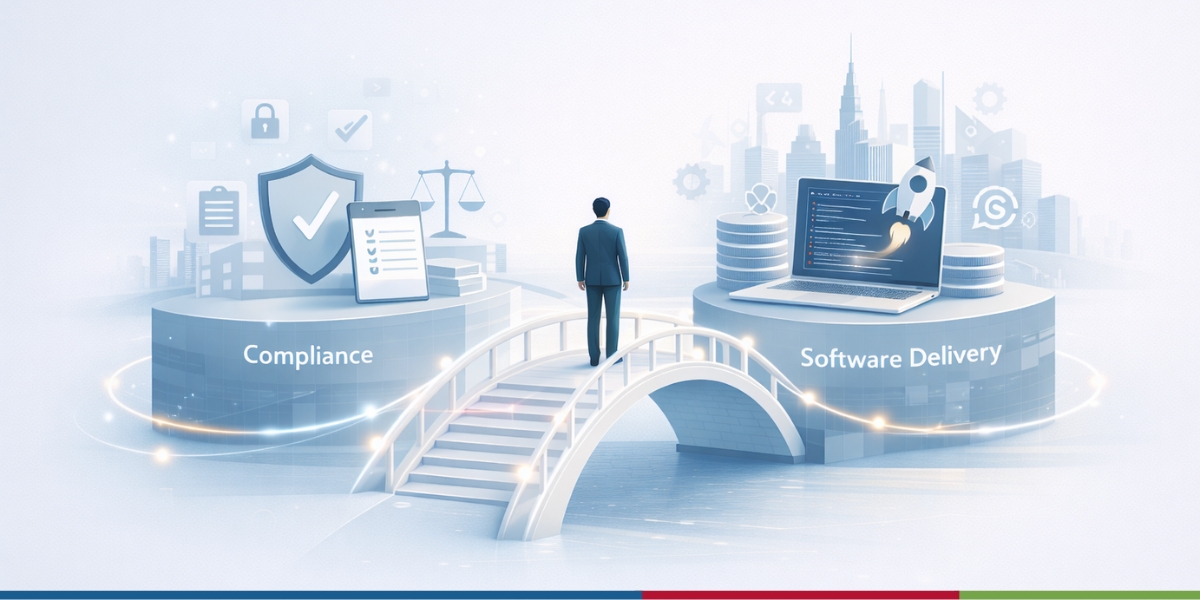
The conflict exists between two opposing parties, yet it can be broken. Organizations which established effective compliance processes between their software delivery teams enable development work to proceed without interruption while they fulfill their regulatory obligations. The company approaches compliance as an engineering challenge that needs to be solved instead of viewing it as a bureaucratic requirement that they must endure.
Most compliance frameworks were designed for different operational models. The system requires manual approval gates together with operational procedures that maintain strict boundaries between development and operations during their infrequent software release schedule. The approach worked effectively when companies released software updates every three months or every twelve months.
The process of software delivery has entered a new phase, which differs from previous methods. Successful tech companies deploy code multiple times daily. The software development process now uses small changes instead of large software packages. Cross-functional teams manage product development from the initial design phase until the product enters active service. The current speed of business operations generates substantial economic benefits, but it creates conflicts with established compliance methods.
The result is predictable friction. Engineering teams view compliance as an obstacle slowing innovation. Compliance professionals see developers as reckless cowboys, ignoring important safeguards. Both perspectives contain truth, and the conflict wastes energy while creating real risk.
The companies that fail to close this gap face severe financial consequences. The businesses that work at high speed choose to bypass compliance requirements until they experience their first penalties. The other companies establish strict security measures that eliminate all development progress.
The move fast break things approach works until it doesn’t. Security breaches expose customer data because nobody implemented proper access controls. Regulatory violations trigger fines and restrictions. Enterprise deals collapse when potential clients need certification details that the company does not possess.
Organizations face high costs and extensive challenges when they need to catch up with compliance requirements. Organizations spend more time retrofitting security controls than they need to build security systems correctly from the beginning. Organizations need between six and twelve months to achieve SOC 2 or ISO 27001 certification if they start from zero. The sales pipeline experiences a complete stop because sales opportunities demand these specific credentials.
Your organization loses market chances while your team spends time evaluating whether changes comply with established policies. The organization fails to grow despite its strong compliance programs.
The solution creates development workflows that start with compliance requirements, which continue through the entire process. This “shift left” approach brings governance considerations into earlier stages of the software lifecycle.
The process begins with compliance requirements, which need conversion into technical controls. The system should use role-based access controls together with audit logging to replace the need for users to check every database access modification. Developers should create encryption libraries that approved parties established as their default encryption implementation method instead of performing manual encryption checks.
The process requires complete automation. The tools evaluate security policies while checking system configurations and producing compliance documentation without requiring human assistance. The system uses automated testing to identify problems that need fixing before the software enters production. The process of continuous monitoring delivers instantaneous information about the operational condition of systems and their compliance status.
The combination of infrastructure as code and modern development practices results in enhanced compliance outcomes. The practice of versioning infrastructure configuration enables organizations to test their configurations at the same level as application code, which results in automatic audit trails and standardized operational environments. The process of code review requires developers to submit their changes for evaluation, which allows oversight to occur without requiring manual authorization steps.
Just as development teams carefully evaluate different technology solutions to find the right fit for their workflows, choosing compliance management software requires the same thoughtful approach to ensure they enhance rather than hinder delivery speed.
Integrating compliance into existing workflows reduces friction. Developers already use pull requests, continuous integration pipelines, and deployment automation. Embedding compliance checks into these familiar processes is far more effective than creating separate approval systems that teams resist.
The right compliance management software accelerates rather than hinders development. Look for platforms that integrate with existing engineering tools instead of requiring separate workflows.
Effective compliance management software should automatically collect evidence from your development and operations systems. When pull requests, deployments, and system changes flow automatically into compliance documentation, teams don’t waste time on manual reporting.
The platform should provide support for risk-based approaches that require different security controls to match specific situations. Organizations need different security measures because their systems present different levels of danger. Good tools enable appropriate controls based on data sensitivity and business criticality.
Join over 150,000+ subscribers who get our best digital insights, strategies and tips delivered straight to their inbox.